How do you choose a retaining wall contractor in Coquitlam?
What to ask, what to watch out for, and what a good estimate looks like. From a Coquitlam contractor that builds these walls. Updated November 2026.
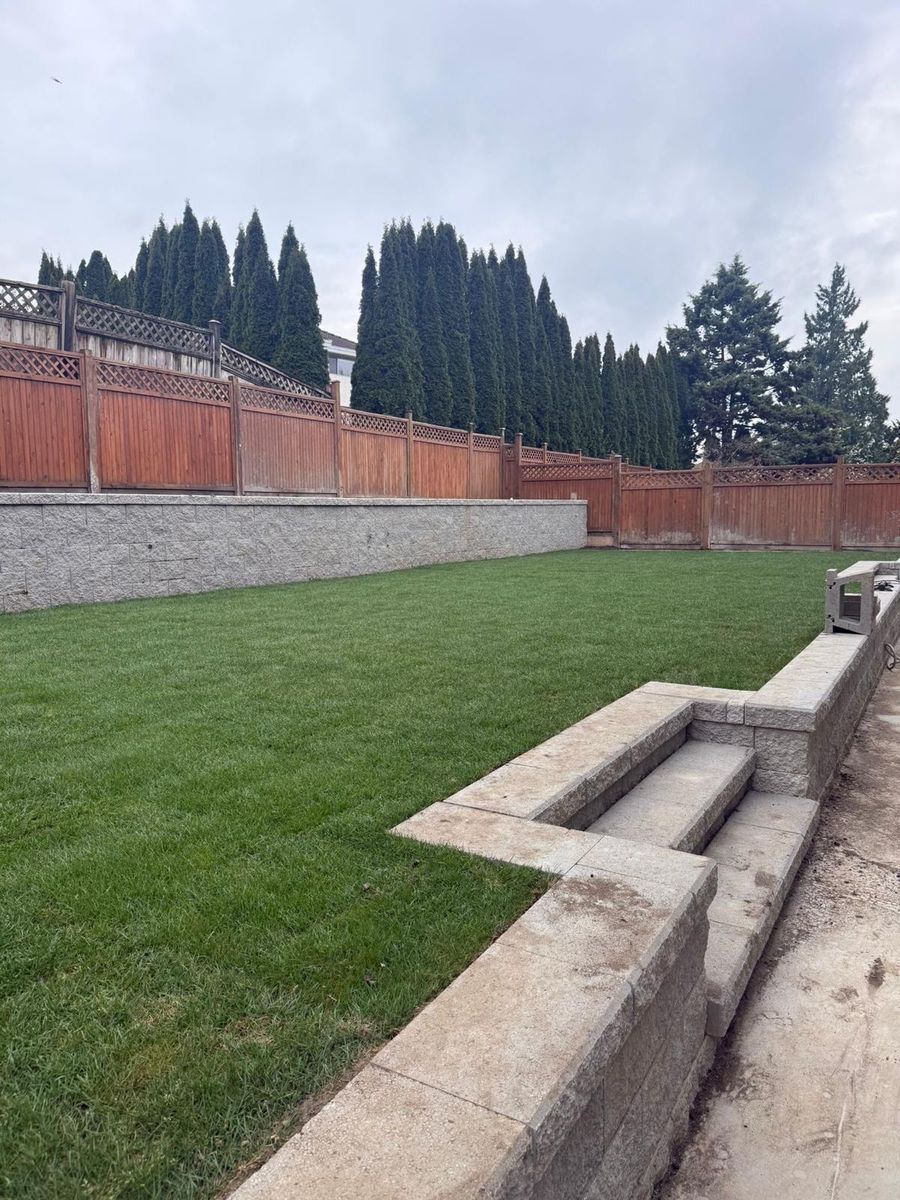
Short answer: Pick the contractor who talks about water first. Most retaining walls fail because rain builds up behind them, not because the blocks were weak. A good contractor will explain where the water goes, how deep the base is, whether your wall needs an engineer under Coquitlam's 1.2 metre rule, and put all of it in a written estimate.
Why the choice matters so much
A retaining wall holds back a lot of soil, and in Coquitlam that soil gets soaked for months every winter. Wet soil is heavy and it pushes hard. The parts of a wall that stop it from failing are the parts you never see once the job is done: the base under it and the drainage behind it.
That's why two walls can look the same on day one and end up very different five years later. One stays straight. The other starts to lean, the blocks crack, and the whole thing has to be pulled out and built again.
6 questions to ask before you hire
- Where will the water go? This is the big one. You want to hear about clean drain rock behind the wall, a drain pipe with holes in it at the bottom, and a real place for that pipe to empty, like a storm connection or a safe spot downhill. If the answer is vague, keep looking.
- How deep is the base, and what is it made of? A wall should sit on packed-down gravel, not on topsoil or loose fill. The first row of blocks should be partly buried so the wall can't slide out at the bottom.
- Does my wall need a permit or an engineer? In Coquitlam, walls over 1.2 metres (4 feet) need both. A contractor who works here should know this without looking it up. If they suggest building it just under the limit and adding more later, that's a problem. (More on the 1.2 m rule.)
- Which wall type do you recommend for my yard, and why? Block walls and poured concrete walls each suit different slopes, heights and looks. A good contractor explains the pros and cons for your yard instead of pushing the one thing they always build.
- Does the wall need mesh tied into the hill? Taller block walls often need layers of strong plastic mesh (called geogrid) laid back into the soil to anchor the wall. Ask if yours needs it and how far back it goes.
- Who will be on site, and who do I call with questions? You should know who's running the job day to day and have one person who answers when you call.
Warning signs
- "You don't need drain rock or a pipe for a wall this size."
- No written estimate, or an estimate that's one line with a total.
- A price far below everyone else, with no explanation of what's different.
- Plans to build straight on topsoil or on soil that was just dug up and dumped back.
- No answer when you ask about permits, property lines or nearby trees.
- Pressure to decide today.
What a good written estimate includes
- Wall type, length and height.
- Digging, and hauling away the extra soil.
- Base material and how deep it goes.
- Drain rock, drain pipe and where the water ends up.
- Mesh (geogrid) if the wall needs it.
- Caps, steps, fences or railings on top.
- Engineer and permit, if the wall is over 1.2 m.
- Restoring the yard and cleaning up when the job is done.
When you compare estimates, put them side by side and check each one covers the same items. The cheapest one is often missing something on this list.
How we build walls at Premier Grounds
We start with a site visit. We measure the slope, look at where water comes from and where it can go, and tell you straight away if your wall needs a permit and an engineer. Then you get a written estimate that spells out the base, the drainage and everything on the list above. Every wall we build has drainage behind it, and on walls over 1.2 m we line up the engineer and the permit for you.
Common questions
What is the most common reason a retaining wall fails?
Water. Rain soaks into the soil behind the wall and pushes on it. Without drain rock and a drain pipe that carries the water away, the wall bulges, leans or falls over, usually after a few wet winters.
Does my retaining wall need an engineer in Coquitlam?
If the wall is taller than 1.2 metres (4 feet), yes. It needs a building permit and an engineer's design. Shorter walls usually don't, but they still have to follow City rules.
Should I just pick the lowest price?
Only if every estimate covers the same work. A low price often means a thinner base, no drain pipe or no plan for the water. Line the estimates up and check each one lists the base, drain rock, pipe and where the water ends up.
How long should a retaining wall last?
A well-built block or concrete wall with proper drainage should last decades. Walls built on soft soil or without drainage can start moving in a few years.
Can I see the drainage before it gets buried?
Ask. A good contractor won't mind showing you the base and the drain pipe before the soil goes back in. Once it's covered, you can't check it.
Getting quotes for a wall?
Add us to your list. We build retaining walls across Coquitlam, Port Coquitlam, Port Moody and Maple Ridge. We'll walk the slope with you, tell you if you need a permit, and give you a free written estimate that shows every layer.